Goats. lol, thanks for the laugh. I’ll have to Google Goat Exchanges with the lowest amount of goat waste. Can I get a discount if I pay with giraffes?
I don’t know if you have experience with online multiplayer games, but many of them use in-game currencies such as gems, coins, or tokens that players have to buy.
From the outside, someone might ask: “Why would anyone pay for that?” But for the people who actually play the game, those items have value. They buy them to upgrade their characters, unlock features, save time, or gain access to things that matter to them.
To someone who doesn’t play the game, it may seem pointless. To the users of that ecosystem, it’s completely normal.
I see Storj’s token in a similar way. If Storj wants the token to have value, it first needs to create reasons for people to use it. A utility token gains value when it becomes useful inside the ecosystem, not when it is ignored.
This pricing change may not be perfect, but creating incentives for customers to interact with the token is a logical first step toward building real utility and long-term value.
I fully agree with this. As I stated few comments above, the whole point of this $min fee is to increase token trading volume. That is indisputable in light of presence of waiver for token payments. This negates “small customers are too expensive” justification, and the “this is to help operators stay in the ecosystem was also refuted.
What is not clear is the bigger question — why bother in the first place. Let banks handle money. Focus on core competency — improving storage service. Let the token die from natural causes. Everyone benefits. But I’m not a lawyer, there must be some regulatory reason why it is not feasible. This is the only sane explanation I see.
There simple swap services that do not require extra accounts or a general KYC that you could try. Like:
As reciepent address you would specify the STORJ address from your Storj accoung.
Something like that might be a way to receive STORJ token without much of the hassles mentioned. Please verify for yourself if you can consider those services trusworthy enough.
There was already a suggestion to make users aware of how STORJ token can be bought in an easy way when we had basically the same discussion after the $5 minimum fee was introduced:
Hello @parolee,
Welcome back!
Please take a look:
Not only that, also this:
@arrogantrabbit, this also applies to your question about using cryptocurrency. With cryptocurrency, there’s no abuse, no fraud attached to the service. Only real clients who pay for services rendered. In my opinion, that’s ideal. No refunds, no scammers, no disputes, no associated fees. Yes, it requires some brainpower, but there’s a saying, “If you tailor a service for idiots, only idiots will use it.”
not a my saying and not opinion of Storj Labs, the source: Google Search
Of course there is another solution, offered in that thread - prepaid with a direct transfers.
My objection was never about cryptocurrency. It was about the use of volative one for payments to operators.
Because operators earn in USD, the only cryptocurrency that will work is USD denominated stablecoin. Gets you the same “no chargeback” protection as a merchant, and does not decompose while sitting in the wallet.
Separately, lack of chargebacks is problematic from customer perspective: if I cannot reconcile the issue with the vendor, chargeback is a powerful levelerage to have. I’ll think twice before paying with something that gives away all my leverage.
I’m still not sure, that Storj Labs can actually use stablecoins for payouts. I do know that, at least in the EU, USDT is on the verge of being banned (it requires so much paperwork that it’s starting to become pointless).
In other countries, they’re simply banned as payment for goods or services. And in some, any cryptocurrency is banned as a payment method.
Unfortunately, most low-usage EU customers create 99% of the problems – they dispute charges for previous months where they happily used the service and now really want to avoid paying for it…
And no matter what - you, as a satellite operator, will pay the dispute fee of $15/15€ + lost payment in a worst case
So I pretty understand a $50 minimum fee and the offer for a Community EU satellite:
and
and
and the whole section of Service abuse elimination
Sure. But then the drift can never be eliminated. Even if storj starts paying in etherium or bitcoin – there still will be drift and people will still complain. Then stabilizing the token on a best-effort basis is all that can be done, short of throwing away all that crypto story and using conventional payment providers. But its not worth going though the whole argument again.
Oh, I absolutely understand the pain on the merchant side. And the fact that card vendors often side with the customer, even if customer clearly abuses the system.
Malicious users can still chargeback. It does not matter whether chargeback is for $5 or $50.
Any form of one-way payment solves the problem of abuse by bad users, while also stripping good users from any protection. I can see how for small amounts of money it’s not a big deal, and large payments can still go though conventional methods, so I don’t disagree on principle.
In fact, I’m all for lean direct payments. I feel all that credit card industry that charges merchants few percents of value, to pay customers kickbacks, and give customers power to abuse the merchant, for which ultimately everyone is paying is pretty backwards and shall be reworked. It’s somewhat better in EU, but in US it’s Wild West. My credit card pays me 5.25% cash back on every purchase. This shall not exist. Who pays for it – everyone collectively though higher prices. It’s stupid.
That’s true. However, the likelihood of spotting a fraudulent $50 charge is somewhat higher than a $5 charge, but that doesn’t completely solve the problem. Therefore, the proposed direct prepayment option is attractive (if I understand correctly, refunding such a payment with a simple “it’s a scam” in mobile banking is impossible, just like with cryptocurrency).
However, at least two undisputed $50 payments will cover the costs of those who decided not to pay for a service already rendered, even if it was $1 (not to mention that it was 100% rendered with 99.999999999999% durability).
And statistically, users willing to pay $50 won’t file a chargeback if there are no issues, right? Again, that’s the statistical model  (“there are two kinds of lies – direct and statistics”).
Again, new accounts will be required to pay $50 immediately, which will be added to their balance. If the user is honest, everything is fine, and they’ll use this balance to pay future bills.
But fraudsters are finding it difficult. It’s no longer possible to cheaply check stolen cards, and the likelihood of being blocked increases significantly when the amount is $50.
So, @kaloyan is right, there shouldn’t be a card payment option. Either cryptocurrency or a non-refundable prepayment. And no free trial.
Thanks for the reply. I took a quick look at ChangeNOW. They do have KYC procedures, actually – but it looks like they may be random depending on risk assessment, rather than up front like Kraken, etc.
But the big down side is their processing fees appear to be quite high. I would definitely expect a hit from using a debit card as fiat of course – but it’s pretty bad, around 5% by my calculations. Yes, that’s still more than what I paid for it when the Storj 10% bonus is factored in, but why give away money?
Thanks for shedding some light for me finally of why the $50 minimum is being imposed on credit card payers and not token payers. That does indeed make sense. But couldn’t Storj achieve the same protection by waiving the threshold for those who paid through direct ACH bank debits? Pretty sure those are much harder to dispute/reverse and outright impossible after a holding period of a few business days.
Please share what credit card gives 5.25% cash back on every purchase? I have never seen a deal that good.
I would like to suggest you to search for your local exchanges, for example, in Georgia (Country) a lot of small exchanges and even cryptomats to get your crypto right to fiat.
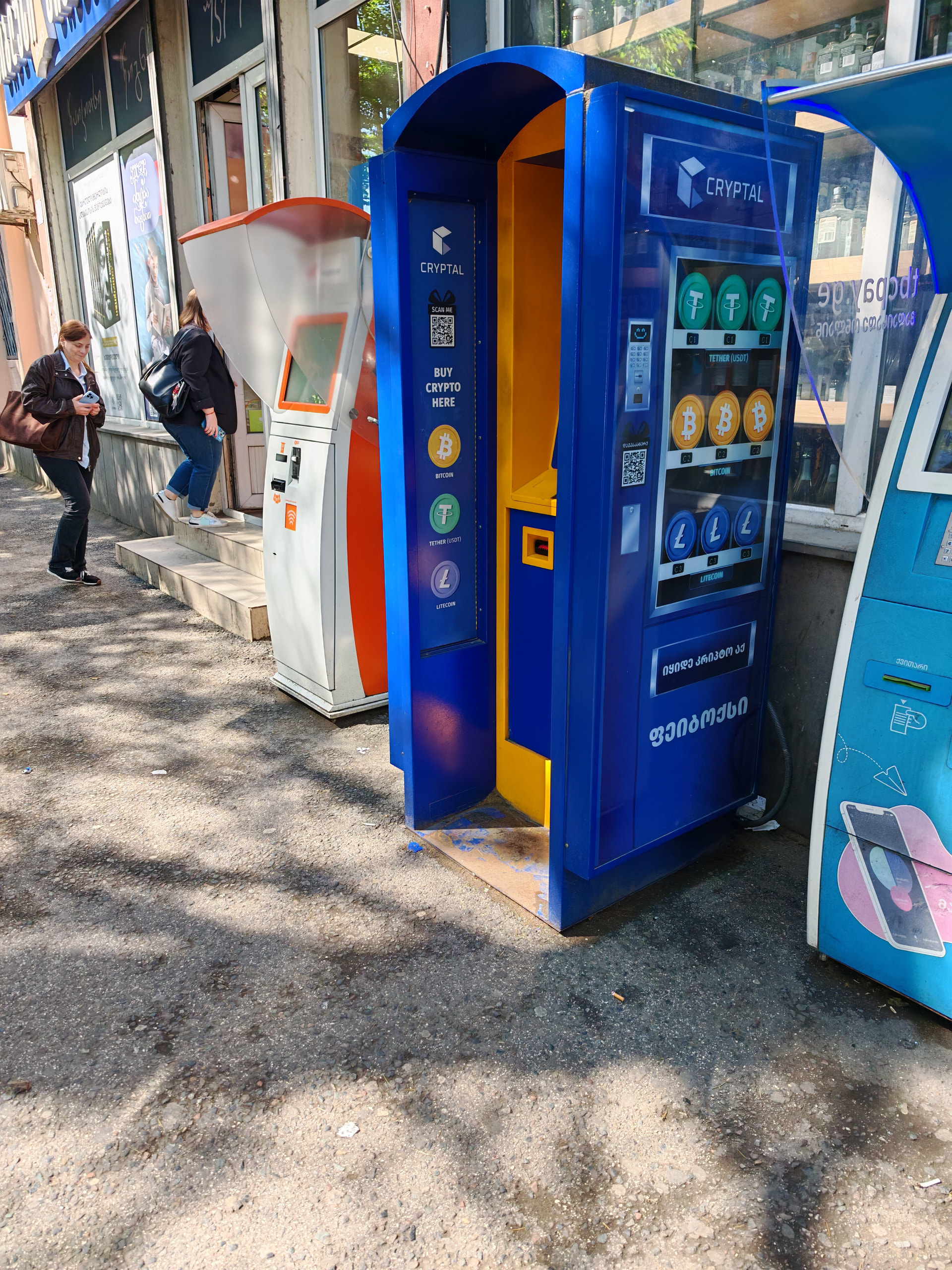
It all depends on your location and regulations in your country.
You have a choice:
- Pay with CC, and meet $50 of a minimum monthly billing. It’s not a fee, it’s a rounding up. If you use less than $50, you will still be charged $50. If you have equal or more than $50 - you will pay only what you have used, $51 - you will pay $51, $2.5 - you will pay $50.
- Pay with STORJ tokens, and have all headaches where to buy it, etc. or being a SNO, who already have STORJ. You may also consider @jammerdan’s suggestion to use No recommendation, just a mention: Iron Wallet to have a privilege to exchange STORJ for something else using STORJ for a transaction fee (usually you need to pay it in ETH).
- Use more than 7.2 TB, or store 4 TB-mo and have 3.2 TB downloads, or any other combination within or above, than $50.
Utter old-fogey noob to crypto – annoyed even having to consider it just for this purpose. But guess I have to bite the bullet eventually.  I am in the US (California) – which further restricts some of the exchanges available to me.
Options 1 and 3 are not applicable to me – I only have 2.5TB of data and don’t expect it to ever grow past past 3-4TB anytime soon. My use-case is backup – and the egress is minimal unless there’s a disaster. My monthly costs to date on Storj have been around $10, and I want to keep them in that neighborhood.
My point in response to the post by @jammerdan about ChangeNow was that after comparing it to Kraken et. al., it seemed like at the end of the day I would get more STORJ for each USD by doing an ACH (or wire) to Kraken … no CC fees for the fiat and much lower transaction and withdrawal fees.
I just wish I could avoid all this and have storj.io just direct ACH debit me for a discount with no monthly minimums – like a lot of other services I pay for do. Or prepayment with a CC for a larger amount that they could deduct actual usage charges from as the months rolled by.
I understand the business case now from jerks abusing the system (I managed Stripe for another business myself – and was equally disgusted that we had to pay the $15 charge on disputes even when we won – agree, that’s utterly unfair to merchants) – but there has to be a better way than this token stuff.
You don’t have to send them $5-in-STORJ every month: you do keep a credit. Buy $60 once and send it to them and you’re good for the year. (The fiat-value and 10%-bonus are calculated when you send the coins: it doesn’t keep them as STORJ and recalculate $5-in-market-value every month)
Oh I definitely would do something like that, e.g., only purchase enough tokens annually to cover another year. My point was that storj.io could save me the whole hassle by just letting me prepay with a CC for an amount in excess of $50 (which presumably is the magic number for them to make it worthwhile for all the baloney fraud/chargebacks they are incurring) and then deduct my lower monthly costs from that balance as time went by. Forcing me to a minimum of $50/mo or to do what I just suggested above with these silly tokens is what doesn’t make sense to me.
This is a bit reminiscent of what my cellular phone provider does for data. Every time my data pool reaches 30%, they top-up automatically with my credit card for a fixed charge. storj.io could do the same thing in $50 increments.
If storj.io handled the automatic $50 (or more if a user blew past that amount in a single month) top-up, that would save me the hassle of having to monitor the tokens and keep something on the calendar to make sure I had enough in there to avoid a “$50 - actual use” penalty in a particular month.
From my perspective, the recent change is understandable and probably reduces operational costs and compliance burdens. However, I still believe it does not address the core concern many token holders and node operators have.
If Storj truly considers the STORJ token an important part of the ecosystem, then the company should actively promote and educate users about it. Today, the token often feels like something that exists in the background but is rarely discussed publicly by the company itself.
As a customer, I would not even know how to pay with STORJ unless I specifically searched for it. Why are there no educational videos, tutorials, onboarding guides, webinars, or marketing campaigns explaining the benefits of using the token?
Over the last six months I have followed Storj’s website, newsletters, LinkedIn posts, community discussions, and public events. I cannot recall a single major marketing effort focused on STORJ token adoption. Most public messaging is about the storage platform, partnerships, infrastructure, and AI-related opportunities, while the token receives little attention.
This creates a perception problem. If the token is important, it should be visible. If it provides value, customers should understand that value. If it is part of the ecosystem, the company should be comfortable discussing it at conferences, webinars, and promotional events.
The recent payment changes may be reasonable from an operational standpoint, but they do not convince me that the primary goal was strengthening token utility. From the outside, it looks more like a way to reduce complexity and responsibility for Storj Labs.
I am not asking for artificial token incentives. I am simply asking for consistency. If STORJ token is a meaningful part of the ecosystem, then it deserves clear communication, education, and visibility from the company itself.
This is prohibited by the current regulatory system. We cannot do this, and this was never our goal. Unlike other “crypto projects”, we never viewed the token as a “product”.
The goal is to create a distributed storage/computing system where anyone can use the services provided, which are managed by a community of service providers.
The token was introduced as a universal means of payment for services for customers worldwide and as a reward for service providers worldwide. However, economic circumstances forced us to add credit card payment options for customers, although this is already a distinguishing feature: not all customers can pay by credit card, even in the EU.
As a dumb end user, I’m looking for:
- A minimum charge for the service (it’s clearly not $50, or tokens wouldn’t be a way around it)
- A maximum charge (we have that now – pricing is clear)
- And an easy straightforward to pay the minimum charge (which is what’s missing – acquiring these crypto tokens may be easy for many, but it is not for at least this one customer – and I’d wager I’m not alone)
I respect completely now why CC fees/fraud have been giving storj.io heartburn. I think there are ways to make everyone satisfied without this crypto stuff, from ACH direct debits to charging CCs in $50 increments that feeds a pool that monthly costs are drawn from.
The one thing I do wish Storj would compete better on though is some form of complimentary egress. Maybe there’s no business viability to do 3x per month like B2 does, but maybe up to 1x per month or 10x per year or something like that?