What would it take to run a community satellite for small users?

A personal note

I am currently employed as a Director of Engineering at the Storj company. This post and the discussion here are entirely in a personal capacity and reflect my own views, not those of my employer.


Motivation

Storj’s new $50/month minimum fee — jumping from the $5 minimum introduced last year — is turning away a meaningful part of the ecosystem. Small users who genuinely value decentralised storage simply don’t need $50 worth of it per month. While accounts paying with the STORJ token are exempt from the minimum fee, dealing with crypto is a barrier for many users. I’ve spent 8+ years working on the Storj tech stack, and I find it hard to watch this segment of the community leave for centralised alternatives.

This got me thinking: is now the first time there is a tangible niche open for a community-run satellite? And if so, what would it take to run one sustainably?

I’m not committing to anything here. This is a thought experiment, and I’d love to hear the community’s honest opinion before anyone — including me — considers taking this further.

A note on perspective: my thinking here is heavily shaped by living in the EU and being most familiar with EU regulations — VAT, GDPR, sanctions, and payment infrastructure. I’d love to hear from people in other regions too, as the concept could apply more broadly even if the specifics would differ.


Who would this satellite serve?

  • Users with a small storage footprint: up to 5 TB
  • Users who want cheap, durable storage with no monthly minimum fee
  • Users who don’t want to deal with crypto
  • Users who don’t need enterprise performance or SLA

Think someone storing a few hundred GB of family photos and backups, currently paying well under $50/month and now priced out.


The math

Let’s assume the average small user pays €0.50/month, and the satellite operator keeps a 20% margin after paying SNOs and covering operating costs:

Monthly margin target Paying users needed
€100 1 000
€1 000 10 000
€10 000 100 000

The uncomfortable truth: until the satellite reaches around 100 000 paying users, this is a part-time side project at best. Sustainability requires keeping costs ruthlessly low.


The risks — and how to address them

Taxes

Running a satellite that compensates node operators means charging users for a digital service. In the EU this requires:

  • Operating via a registered company
  • VAT registration with no minimum threshold for digital services
  • Collecting and remitting VAT at each EU member state’s rate — most countries falling between 20–25%; non-EU customers would not be charged EU VAT, though their own country’s digital services taxes may apply
  • Corporate and dividend taxes on top

This is manageable but adds accounting complexity and cost.

Payments

Storage services are a well-known magnet for card fraud and abuse. Chargebacks are always at the merchant’s expense regardless of fault — and a high fraud rate can get the operator’s bank account frozen, which kills the business immediately.

On top of that, Stripe charges 1.5% + €0.25 per transaction for EU cards, more for international cards, plus $15 per disputed charge — win or lose. On a small top-up, that dispute fee alone wipes out the margin from dozens of users.

One approach worth discussing: asking users to prepay their usage via SEPA Instant transfer or Wise rather than charging cards. Both are fast (often instant) and usually free in the EU. To keep accounting overhead manageable, there would need to be a minimum non-refundable deposit of around €5 — similar to topping up a prepaid SIM card. The balance would never expire, so a single top-up could cover many months of light usage.

Question for the community: Would a prepaid, non-refundable minimum deposit be a blocker for you as a user? Or is it an acceptable trade-off for no monthly minimum?

Regulations and sanctions

An EU-operated satellite means EU sanctions rules apply — and EU sanctions impose significant restrictions on payment services to Russian nationals and entities in Russia, meaning paying Russian SNOs via SEPA or Wise is effectively not possible. This unfortunately excludes a large portion of the SNO community from receiving payouts from an EU-operated satellite.

Paying SNOs with crypto (STORJ token or stablecoins) would complicate sanctions compliance significantly. EU regulations such as the Transfer of Funds Regulation (TFR) require crypto transfers to carry verified sender and recipient information, meaning the satellite operator would effectively need to perform KYC on thousands of SNOs to ensure none are in sanctioned countries — expensive and complex. The simpler path is EUR payments via Wise, which delegates KYC and sanctions compliance to a regulated institution.

SNO adoption

The satellite needs a few hundred nodes before it can onboard users. In the early phase, SNO earnings would accumulate but not be paid out until a minimum threshold (around €5) is reached — to keep payout accounting manageable.

Questions for SNOs:

  • What payout rate would make this satellite attractive to join? For reference, Storj currently pays $1.50/TB/month for stored data and $2/TB for egress.
  • How do you feel about receiving EUR instead of STORJ tokens?
  • Would Wise-to-email payouts work for you? (Zero fee for Wise accounts, free or small fee for SEPA bank accounts)
  • Is a €5 minimum payout threshold acceptable if unpaid earnings roll over and accumulate?

User adoption

Performance, especially in the beginning, won’t match storj.io or other providers. The satellite would be operated by a single person, so availability would be best effort without an enterprise SLA. That said, data durability is guaranteed by the underlying Storj protocol — as long as SNO churn remains manageable, the network repairs data accordingly.

Questions for the community:

  • How critical are performance and availability for your use case? How forgiving would you be about occasional downtime?
  • Given these limitations, should pricing be lower than Storj’s current rates? Or is the absence of a monthly minimum fee enough of a differentiator?
  • Note that the satellite would not include free egress — users coming from the old Storj free egress model should factor this in
  • Would the lack of a card payment option be a blocker for you?
  • Would forum-only support — no individual email support — be acceptable?

Service abuse

The measures below are not about making money — they are about keeping the service fair and sustainable for everyone who relies on it.

  • No free tier or free trial — without this, throwaway accounts become trivial to create at scale
  • No card payments — eliminates card fraud and chargeback abuse entirely
  • Minimum billable storage duration of 30 days — prevents abuse from short-lived or frequently overwritten objects. In practice this means the satellite is not suitable for frequently updated files or ephemeral storage use cases. Would this affect your use case?
  • Minimum billable object size of 128 KB — coordinating tiny files has real costs that aren’t reflected in storage volume alone. Objects smaller than 128 KB would be charged as if they were 128 KB, similar to S3 Infrequent Access
  • Object metadata counts — metadata is included in the storage and egress measurements and billed accordingly
  • API request charges — frequent bucket listing is one of the most expensive operations on a satellite and a common abuse vector. As a reference point, AWS charges $0.005 per 1,000 LIST/PUT requests and $0.0004 per 1,000 GET requests. Would a similar pricing be acceptable?

Question for the community: Are these measures reasonable for the type of storage use cases you have in mind? Are there any that would be a dealbreaker?

Burnout

A single operator cannot provide individual email support for thousands of users. Support would have to be community forum only, addressing issues that affect larger groups rather than individual tickets. Availability would be best effort with no enterprise SLA.

Several design decisions already help reduce the burnout risk: the prepaid model eliminates billing disputes and refund requests; no free tier eliminates abuse-related support overhead; forum-only support is the only model that scales for a one-person operation.

The harder question is: what happens if the operator steps away? A single-person operation has no built-in succession plan. Users trusting their backups to this satellite deserve a clear commitment — at minimum, adequate notice and a wind-down period that gives them time to migrate their data if the service ever shuts down.

On the continuity side, there is some natural protection: the satellite software is open source, and the infrastructure scripts for running a satellite would be published openly. The hope is that a working community satellite — with all its operational knowledge shared publicly — would motivate others to launch similar satellites in different regions. A healthy ecosystem of community satellites would be far more resilient than any single one, and would serve small users across the world rather than just one region.

Until the satellite reaches significant scale, this will realistically be a part-time side project. Users should set their expectations accordingly — and that is precisely why the no-SLA, forum-only support model is the only honest one to offer.

Question for the community: Would a clear wind-down commitment — e.g. a minimum notice period before shutdown — be enough to give you confidence in relying on a one-person operated satellite for your storage?


Let’s discuss

I’m not launching anything yet — this is a conversation starter, not a proposal. Before anyone invests time or money, I want to hear from the community:

  • Small users: does this resonate with your situation? What would make you trust a community satellite with your data?
  • Node operators: would you join a satellite like this? What terms would matter most to you?
  • Everyone: what am I missing? What concerns or ideas haven’t been raised here?

Please share your use case, your concerns, and your honest opinion. The goal is a lively discussion that either validates the idea, improves it, or reveals why it wouldn’t work. All of that is useful.

Not a blocker at all. I’d actually prefer that. Absolutely no reason to expose oneself to chargebacks and pay for the privilege. In the framework of community satellite this is absolutely the way to go.

$0.10/TB store $O/TB egress. I’d join today.

Happier than storj tokens. I don’t want o receive storj tokens. I’d much prefer USD but EUR is just as fine. As long as it’s a real money and not candy wrappers — I’m the happy man.

I don’t know what it is. But I’m ok not receiving a payout for a year. By then something can be figured out. Like a bank transfer. Or any number of international payment options that were surfaced on this forum before.

$5 is not an amount of money worth discussing. I’ll be fine with $100 threshold.

Putting on my user hat

Irrelevant. I’m using storj for backup. Durability matter more than uptime.

No. Pricing shall not be lower. Maybe higher — because value ie excellent in spite of higher risk. We don’t want to be competing on price. Price focused users will jump ship when competitor saves them $.02. We shall not be focusing on those users.

Fine. I honestly prefer Amazon model — pay for what you use. Use egress — pay for egress. Use api — pay for api. Rolling egress cost into storage cost I find dishonest — I’m paying for something indirectly that I may never use.

Not at all. As long as bank transfers are supported. And we stay out of crypto. Crypto will be and is a friction point.

Absolutely.

100% reasonable and expected.

They put $1000 into the escrow, that guarantees that they can only close shop after sufficient notice.

Exactly. Yes. With the knowledge of monetary interest on the part of the operator. Not just pinky promise.

I’m small user. I don’t mind sending crypto to avoid $50 min. I strongly dislike, it but it’s never a deal breaker, so community satellite will be viewed through this lense, and therefor “lack of minimum fee” cannot be the only benefit.

Yes. Nothing will matter. I have free space. Amount of money even storj pays is not enough to matter, so money is definitely not a driving factor here.

Important question: why would customers (that don’t hang out on this forum and are not familiar with at leas the forum persona of the operator) choose to store data on some unknown dudes satellite with no history when storj provides the same service at larger scale? What’s would be competitive advantage, other than price? And note, there are plenty of horrific cheap storage provides out there, so low price is not an advantage. So, what is?

SNO side: $2 per TB stored, no egress, no repair. Would prefer payments in EUR/USD directly, instead of dealing with the token.

Customer side: $10 minimum topup to save on fees.

Wow! This is surprisingly low. But, of course, other node operators would expect something different like

This is valuable info. Keep posting your expectations.

Wise-to-email is a Wise feature that lets you send money to someone knowing only their email address. Since storage nodes already register an email with the satellite, no additional information is needed from operators to execute payouts. Wise also supports batch payments this way, making it practical to pay thousands of node operators in one go.

When an operator receives a payment, they get an email from Wise with instructions on how to claim it. They can choose to receive it to a Wise account (free), an EU bank account (usually free), or an international bank account (conversion and transaction fees apply on their end).

Interesting idea, I will explore it. Are you aware of any escrow service worth looking into first?

The real differentiator is not what the service does, but how it is run.

Trust through transparency: a satellite operated by a large company is ultimately accountable to its business objectives and shareholders. A community satellite is accountable to its users. This satellite would run on open source software, with infrastructure scripts published openly so anyone can audit how it operates or use them to run their own satellite. Finances will be transparent and pricing decisions will be made through community voting.

Aligned incentives: a company optimises for growth and profit. It can raise prices, deprecate the service, or sell to a competitor — and users have no recourse. A community satellite operated by a single person with a publicly stated mission, community voting on key decisions, and an escrow-backed wind-down commitment is structurally different. The operator has no investors to satisfy and no growth targets. The goal is sustainability and serving the community, not growth for its own sake.

Neither of these advantages is easy to communicate to someone who doesn’t hang out on this forum. But within this community — people who already understand decentralised storage and have seen how corporate priorities can shift — is that a credible and meaningful story to you?

The users I’m trying to reach are not price shoppers. They are people who believe in how this technology works and want to keep using it without paying for capacity they don’t need.

And more directly — what would it take for you personally to choose this community satellite over the alternatives?

Hello,

In some country, the currency power is weaker, my country is about 6-7 times weaker, aka: $1 feel like $7 in term of purchasing good.

I’m not a lawyer but I’ve heard of rule 183 and tax treaties (Double Taxation Agreements) between countries, I don’t know if you could use that.

Some country don’t have it at all, on both ways, I heard Singapore is very business-friendly.

Personally, I won’t solve this problem, it painful to have raise price every few years because of how the world structured, I just create 3 (or more) sats with different price point, SNOs feel free to choose, they could split resources or they don’t care and join all.

At customer side, they could choose that OR they could choose a stable server with dynamic price base on average of different price point sats. Stable as in meaning: they don’t want to be rip off, but they have no intention of moving data, they would be happy with the average of everyone else paying.

P/s: these are just an idea, might not implement if have better idea :zipper_mouth_face:

TL; DR at the bottom.

Think of it this way:

I produce tomatoes. Planting them/watering them/picking them, takes time and (assuming you pay for water, money). I even offer to deliver them directly to the customer.

Alice wants to buy a tomato because she wants to make a salad tonight. Unfortunately she has to stay at home because there is a lockdown order in effect. So she asks ChatGPT “do you know of anyone that can deliver a single tomato to my house in the next hour?”.

ChatGPT answers:

This is an excellent question Alice!

I do know of someone that can deliver it, but unfortunately
I don't have any direct contact information of his.

There is this other middleman that can facilitate this transaction:
- you send him the payment and your location
- he will get in contact with his supplier to sort you out!

If there is anything else I can do, feel free to ask me!

Alice gets kaloyan’s contact information, calls up, agrees to pay and provides the location for the delivery.

kaloyan thanks Alice for her order, hangs up, then calls me up and gives me the order to fulfill. I get it sorted out and send him a bill.

Alice now has paid $3 to kaloyan, which in turn paid $2 to me for an immediate delivery of one single tomato. Yes we all can agree that this is a rather expensive tomato, but we also agree that since I did most of the work (grew the tomato, even paid out of my own pocket to get it delivered before seeing any payment), I get to keep the $2. kaloyan agrees that since this is a fair trade agreement (ie I kept up my end of the deal), they get to keep part of the payment for the “trouble” of matching a customer with a supplier.

Now imagine arrogantrabbit coming into the supplier list as well. They have inherited a multi-thousand square km property, filled with tomatoes and a well to water them with. They even got their neighbors to help them pick the tomatoes for free. They can undercut my asking price because well, tomatoes are basically free for them. They contact kaloyan and ask for $0.10 per tomato. Business is booming for them, kaloyan now gets into trade deals with thousands of supermarkets, individuals, even entire countries. Alas, arrogantrabbit’s well has dried up. They pushed it too hard, trying to keep up with demand. arrogantrabbit now has to (God forbit!) PAY for water.

In the first few months, nobody notices anything, other than arrogantrabbit’s accountant (they had to employ someone just to keep up with the $billions coming in). The accountant raises an alarm “hey, we are paying more than we have coming in. Savings will run out in the next 6 months if we don’t do anything”.

arrogantrabbit doesn’t do anything because well, it’s in their name (no offence by the way). 6 months down the line, they suddenly can’t keep up with kaloyan’s orders. They close shop, kaloyan gets ridiculed to their customers, everybody is sad.

Except me. Since I’ve been charging a price that took into account my expenses, I keep providing tomatoes non-stop to other customers.

TL;DR: The SNOs get the lion’s share of the payment. They are the ones providing the service, not the satellite. The satellite gets a fraction of the payment for helping out matching supply and demand. As long as the service is provided as agreed, and there is documentation/instructions easily available, nobody is going to complain. When was the last time you had to contact Google for a gmail issue?


Adding that such satellite should only be provided natively, no S3 provided. If you need one, bring your own. Charge a fair price to the customer, pay a fair price to the supplier, get a portion of the payment for your trouble.

Looking forward to comments “but satellite infrastructure has billions in cost, they need to be paid”. I’ll pre-empty that with “use Oracle free tier, see where it goes, migrate to dedicated hardware when billions of customers require it”.

That was great, just love button is not justified, thanks for the effort @Mitsos.

I would go the other way: go all-in on crypto payments, even if each top-up had to be the equivalent of $50 or something. Handing $5 monthly bills (and operator payouts) in fiat is just too expensive.

Perhaps entice another company to run it - not to sound like an ad but places like TierHive run these types of barely-fancier-than-community-run services, with token payments

So what word-of-mouth advertising would attract users?

  • S3-compatible Open-source software
  • A strong focus on contributing your own space… to pay for your own usage
  • Crypto-only billing and payouts

Leave the $5-in-fiat customers to the existing providers to fight over: there are already lots of them. Pick another niche and be great at it! :money_mouth_face:

Mitsos, love the tomato analogy — and you’re absolutely right that SNOs are the backbone of the service. Without them there is no storage.

That said, running a satellite involves more than matchmaking. The satellite is responsible for:

  • Metadata management — tracking every file, every segment, every node holding each piece
  • Repair — continuously monitoring data health and repairing segments when nodes go offline
  • Billing and payments — charging users, paying SNOs, handling accounting and compliance
  • Legal and financial liability — the satellite operator is the entity users and SNOs have a contract with, responsible for sanctions compliance, VAT, data protection regulation, and everything that comes with running a real business
  • Trust — without a reliable satellite, users have no guarantee their data is where it should be

The 20% margin I outlined is what remains after all operating costs are covered — infrastructure, accounting, legal, and the operator’s time. It’s not extracted from SNOs, it’s what makes the whole thing sustainable enough to keep running.

You’re right that nobody complains when things work smoothly. But when something goes wrong — nodes churn faster than the network can repair, a user loses access, a payment fails — it’s the satellite operator who is accountable. That accountability has a real cost too.

Ultimately, SNOs must be paid well enough to cover their costs and have something left over — otherwise they won’t stay, and the network falls apart. Finding the right balance between user pricing and SNO payout rate is exactly the kind of decision the community should make together.

Running natively would be simpler and cheaper, agreed. But Storj saw very limited adoption until they hosted the S3 gateway themselves. S3 is the de facto standard for object storage and most tools and applications support it out of the box. Would today’s target audience be comfortable running their own gateway or using the native protocol directly, or is hosted S3 still a prerequisite for meaningful adoption? Genuinely curious what the community thinks.

This might be better for another part of the world, but not in EU. Crypto does not make things cheaper or simpler. Quite the opposite.

Smaller customers were never on Storj’s radar (personal opinion, judging by past Storj record). In a galaxy far, far away, at an ancient time, there was the suggestion of making a nice GUI client for customers to use (like, random namedrop here, spideroak). You select the folders to backup, set the frequency/retention, let it do its thing. Storj replied that the world’s entire GDP does not even cover 1% of the cost to make this client, so it was abandoned and they laser-focused on the easy pray: large business customers, with their own IT teams so they don’t have to do anything. They didn’t account for the IT team’s laziness: they already had an S3 ready solution, so they needed an S3 gateway to go with it. At first (see previous reply, every story begins like this) everybody was happy. Up until the point where Storj realized that their biggest expense was supporting these S3 gateways. They started passing the costs first to the SNOs (payout cuts), then to the customer ($5 minimum) and so on (see recent pricing changes). Why? Because if they start charging for the actual S3 usage, that IT-easy-pray will wave goodbye.

This satellite we are discussing is exactly the opposite: It should focus on tiny to small customers. The ones that want a resilient offside backup. If it blows up, it blows up. It’s not the primary focus for realtime-worldwide-multi-team movie editing, it’s there as a “hey, my house got burned down, I lost my primary file copy, the NAS that I was backing up to also got burned, let’s see if Mitsos that is halfway across the world, has a copy I can get”. There are many comments on this forum that support this: people just need somewhere to backup to, with a reasonable assurance that if it hits the fan, there will be somewhere to get their file from.

How would that work? It would take 1000TBm until you get paid.

The main problem I see is to attract enough costumers as well as enough SNO’s.

Personally I would join the community satellite if the payment is similar to the official ones.

Yeah… no. Satellites are providing the crucial services. SNOs are disposable. The entire architecture assumes they’re deadbeats who could disappear at any time :). Payouts can be ruthlessly low… and due to the scale of the Internet (and all the people who will accept some-payment over no-payment) node count won’t be a problem. Storj has cut payouts over and over… and node count has climbed and climbed - so we know $1.50/TB/m is still too generous.

The problem will be attracting enough customers to be worth running satellite services.

Agreed. However this plays out, the entity running it needs to avoid a business footprint in the EU. Perhaps they can be based in the UAE or Singapore?

HDD prices have tripled over the past year. When your HDDs die, we’ll talk again. If you think getting paid for providing a service that comes with associated hardware costs (which you need to provide the service for a long time in order to get an ROI) is “too high” then just go door to door and ask people if you can run a node on their NAS. It’s easy money and this is financial advice.

Node count isn’t going up because the payouts are high. Wallet count went up by about 200, compared to last year. Node count went up by 5K. People are just running more and more nodes per wallet (ie same SNO, multiple nodes) trying to get compensated enough to make it worth their while.

If someone already living in UAE or Singapore wants to launch a community satellite from there, that would be great. For me personally, operating a business from anywhere other than my own country would be impractical and expensive.

Exactly. Node count is going up despite payouts not being high. Even with the current price of storage.

Finding people to accept low payment for a bit of disk space… isn’t the hard part. Running a customer-funded satellite is.

Over the years, Storj supported the development of several native connectors — FileZilla, Duplicati, and Rclone come to mind — that serve the backup use case well without requiring an S3 gateway.

I agree that a community satellite can start without a hosted S3 service and add it later as a separate paid feature, only if there is real demand for it.

For me, the Sat does not need to pay anything in terms of money. How I currently use storj - I store 11TB of their data and they store 3.4TB of my data. The income almost exactly pay the fees. It works without any monthly manual intervention needed.
If there is a Sat where I need to store three times or less amount of data that I use, it will be great upgrade for me.
No crypto or Wise or EUR needed anywhere along the path.

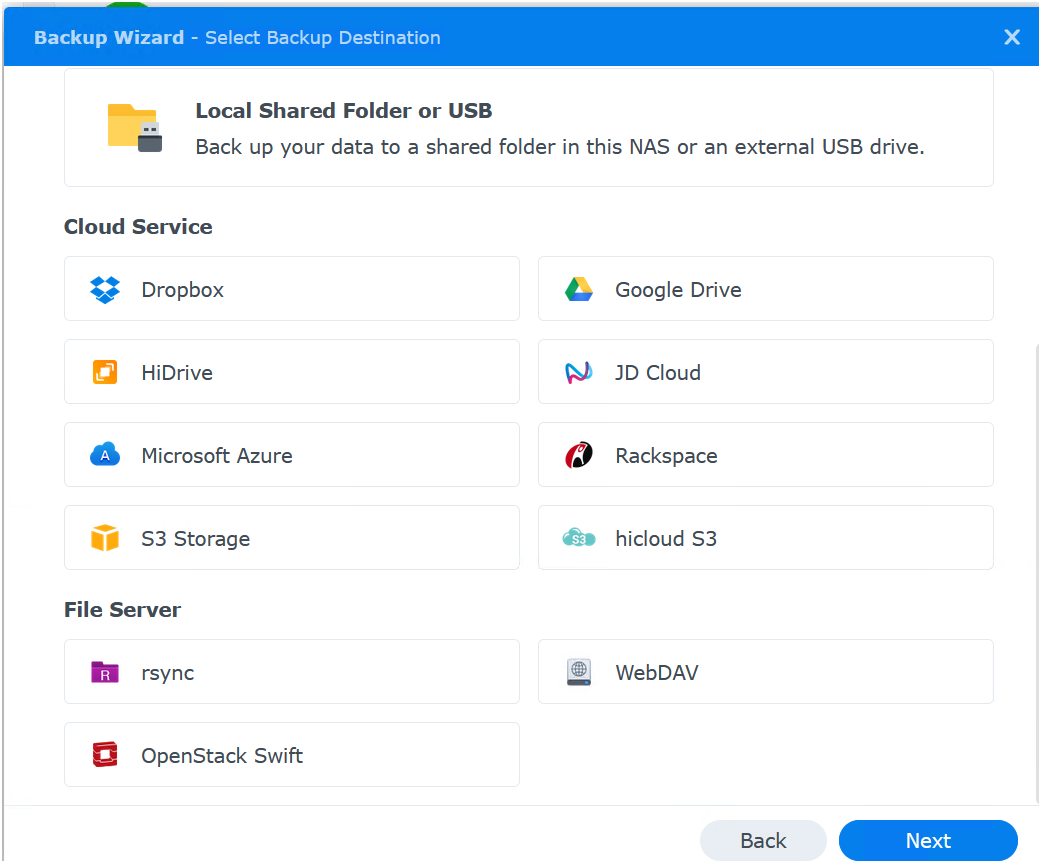
I’m unable to use any of those. I can only choose from following, so if I have to additionally run S3 GW somewhere, it would likely not work for me:


I’d be happy to see Storj alongside Azure, Google, and others, appearing in front of millions of Synology users, but I understand that no one would want to pay for that kind of marketing opportunity.

I would love if this works out.
Personally I set my price in anther project to 1€/Tb stored and 1.2€/tb egress. (This is just to fill unused disk space until Storj would eventually use that).
I would add you to my nodes for sure! And payment would work anything for me. Afaik my bank supports wero since a few months ago.