I get why this new headline triggers the “who owns what now?” reflex — the naming is genuinely confusing.
What I think we can say from the primary sources (and what we can’t):
Storj hasn’t been “sold twice”. Storj agreed to be acquired by Inveniam Capital Partners (that’s the entity name used in Storj’s own announcement).
The Feb 12 release is about Inveniam Capital Partners entering a merger agreement with MEASA Partners. In that same release, MEASA is described as leading “Inveniam Capital” — explicitly framed as a business unit.
So, @snorkel / @Ottetal: I’d separate “Storj got flipped again” from “parent-level structure and governance may change once a merger closes”. The second can be a real risk factor — but it’s not automatically the same as a second Storj sale.
You’re both pointing at the same ambiguity: “Inveniam Capital Partners” (company name) vs “Inveniam Capital” (business unit name).
The press release is clear that MEASA leads the business unit. It does not disclose enough detail for outsiders to conclude exactly how group-wide control, boards, or voting will look post-close. That’s the key missing piece.
About “$700B+”:
The release language is “track record overseeing” (career/roles), not “this regulated entity currently manages $700B AUM”. That distinction matters.
If you want one “hard” verification point beyond PR language: the ADGM FSRA register / firm profile for MEASA Partners Ltd (FSP 240086, Active) shows a Category 4-style scope (arranging/advising) with explicit limitations like:
not permitted to hold/control client assets
not permitted to deal with retail clients
That doesn’t tell us whether this merger is good or bad for Storj — but it does anchor what MEASA Partners Ltd is, regulator-side, instead of letting the headline do all the work.
Where I’m personally at (pure SNO view):
M&A always adds integration / strategy / priority risk (agreed with @jammerdan on that).
But the only “external” health signal SNOs can rely on is still boring stuff: ops stay stable + payouts stay predictable.
If payouts ever get delayed/cut/unreliable, that’s the first signal that deserves immediate risk-management action.
Also worth keeping an eye on: capacity and demand. The public stats still show a very large network (tens of thousands of active nodes per satellite) and ~56 PB stored across the satellites with significant estimated free capacity on us1 right now. If their RWA story actually drives real demand, keeping the supply side confident matters.
If Storj/Inveniam can publish a short “what changes / what doesn’t” note (like they did around the acquisition), it would probably defuse 90% of the speculation here.
Just weighing in on this topic to help clear up some of the confusion. Though I can’t provide all the details I’m sure you would like to have as some of it is not public information. What I can confirm is that Inveniam capital partners is the company that acquired Storj. This means they purchased all the stock and now have full governance control of the company, though the daily operations of the company are still being run by the previous Storj leadership team with largely the same goals. Inveniam Capital Is a division within Inveniam capital partners (I agree the naming is a bit confusing). And it is this division that MEASA will be operating. I do not believe that MEASA has full governance or operational control of Inveniam Capital Partners. This was a merger not an acquisition. So governance structure changed on some level for sure but “control” over Storj operations has not meaningfully changed.
What got Storj from this acquisition, fact that stocks was bought mean only that previous owner got money back with some bonus. Does Storj got additional finances? Or i am getting something wrongly?
“We’re excited to partner with TenrecX to bring Storj’s distributed cloud storage and storage-optimized compute architecture to a wider set of organizations. TenrecX’s consultative model aligns with our belief that customers succeed when they have choice, transparency, and strategic guidance.”
We’re pleased to welcome R.W. Holleman as Chief Revenue Officer at Inveniam.
I’m confused… he is CRO at Inveniam or at Storj? Maybe they just kept Inveniam name out of it, to not confuse clients?
But why do you say leadership is changing? This is partenership, TX will just resell Storj services, not a merger or takeover.
The fact that quarterly updates/communication has stopped, token flow reports have stopped, and this silent change is certainly concerning.
When Valdi was acquired they explicitly stated the following “Additionally, we will be integrating token payments, allowing customers and providers to transact using the STORJ token.”
When Storj was acquired they stated “We’re particularly excited to integrate the STORJ token into our ecosystem, driving greater utility and alignment across our platforms.” -Patrick O’Meara, Chairman and CEO of Inveniam.
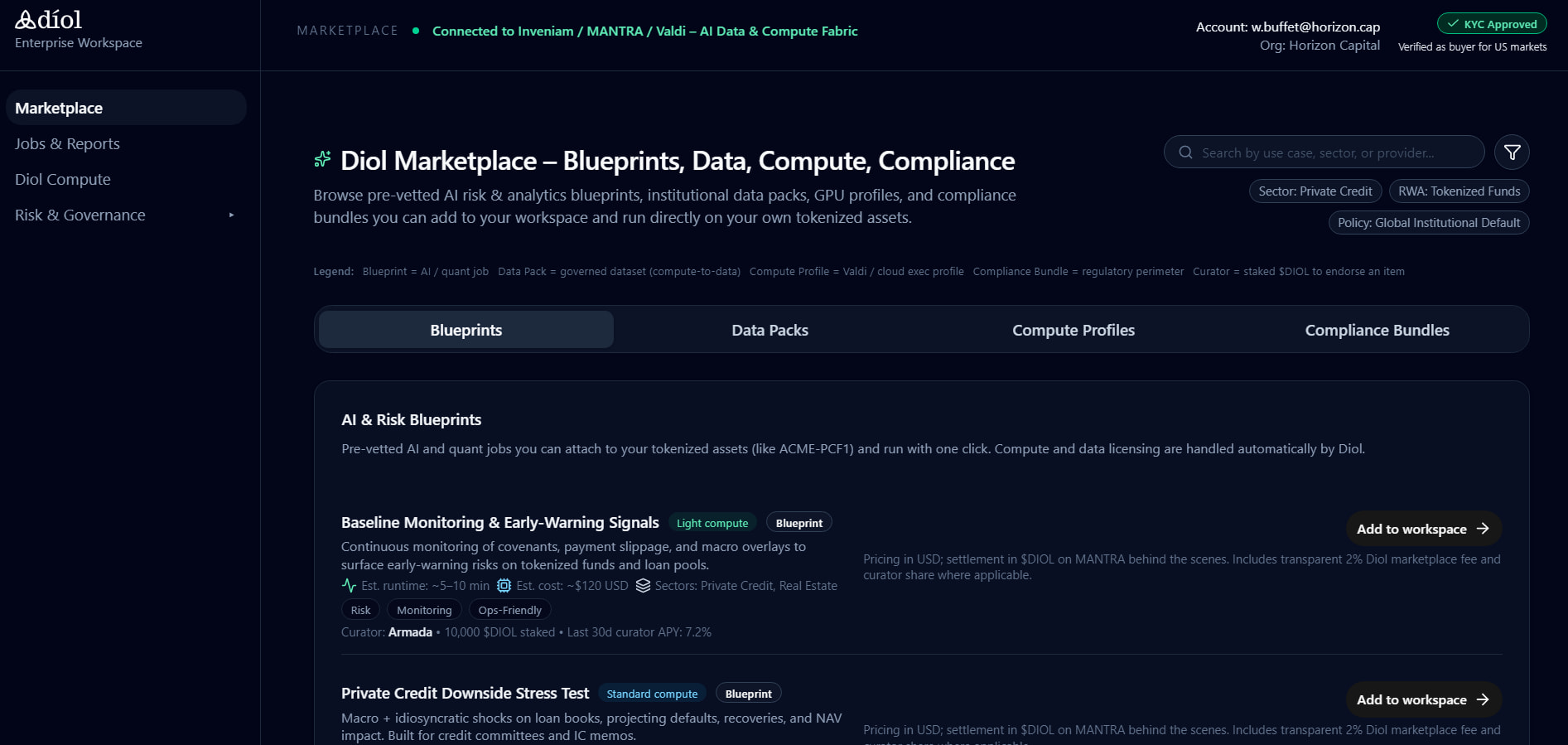
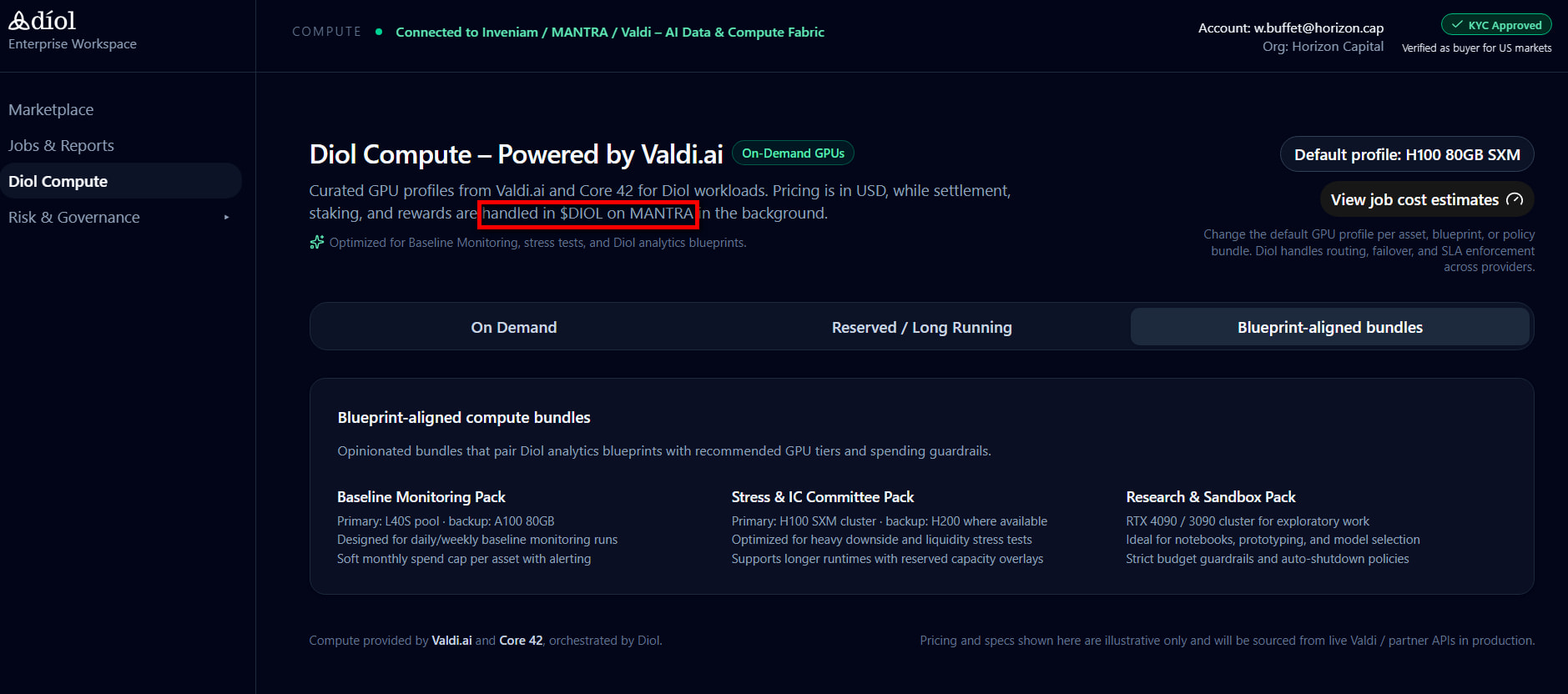
This change directly contradicts those statements, it looks more like a parallel system than integration, and currently there is no storage layer visible on the diol cloud site. They do mention storage on the diol.io site but with no reference to Storj as the underlying infrastructure or settlement mechanism.
I would like to know where STORJ token fits in Diol’s customer-facing architecture. Specifically, does STORJ token retain any customer-facing settlement role within Diol infrastructure, or is it limited to backend node operator payments?
There was a decision to hide it in order to have a better presentation for NAB. Valdi is still part of Storj. We just need more time for a better integration.
I have seen some rumors around that but I haven’t seen anything actionable. Feels like we can ignore that for at least a few more months.
Are we still bound by the T&C, if we didn’t explicitly agreed to them under the new owners?
Like clicking a button or just receiving an email about it? I realy can’t recall if we got one or not…
Payments are being processed, customers are paying, the number of storage nodes is growing, both storage and compute utilization is increasing, so it looks like growth is continuing and Storj is here to stay.
Storj CEO Colby Winegar will be leading the Storj subsidiary.
And now only 5 months later the Storj CEO leaves the company. Of course a new CEO can bring a lot of new ideas and initiatives and create new opportunities depending on who this will be.
However, after all that hype and enthusiasm over the acquisition it looks bad when the CEO of the acquired company resigns. Something obviously did not fit.
We are also continuing to expand our geographic footprint. We’ve got a pretty good presence now in Asia and Europe. Europe and Asia are both doing a bang-up job. But we don’t have any presence in some other pretty good-sized markets. So we continue to look for those opportunities.
One more question. From my understanding, probably the majority of cloud storage providers use Wasabi on their back end. Is that correct? How many of those relationships do you have?
I think there’s about 350 what we call technology alliance partners. These are companies who, in one way or another, use Wasabi as a storage element in their own products. They range all the way from backup companies to surveillance companies to things like medical imaging.