How is the progress to make the public network soc2 certified? Or is this paused?
It doesn’t sound like they need it any more? The new $7 Standard tier is the public network, and the $10 Advanced tier is the Select/SOC2 network. Both have plenty of empty space, and the price is easy to understand (basically pay $3/TB/m more if you want SOC2).
If Storj continues to just pursue just big company’s, then they will just focus on select, because they pretty much all needs soc2. If both networks have soc2 certification, then it would be beneficial for both. Yes they can leave it as it, that’s the reason I asked if they stoped it. But I am still worried that the public network will be left behind.
The new pricing starting on July 1, 2026. Maybe not a best analogy.. 
Sorry
Perhaps. What to do with existing ones?
It is my intention to get the public network SOC2 Type II, we have identified a path to accomplishing this with our auditor. Please note we do not have an eta and this is not currently in progress, however, there is a plan for when we are ready.
@Dominick This might be the most exciting thing I’ve heard here in a while 
They still need it.
Select is US only. And if they get the global network SOC2 compliant they can raise the price to $10 generally.
This definitely sounds good.
However:
I understand priorites. But what could be a higher priority other than making the global network more attractive a large number of customers that are prohibited from using it? As SNO for me this is a number 1 priority.
Maybe there are other means to make the global network more attractive to a large number of other types of customers?
Just guessing.
It is time consuming. SOC2 certificate for the public network would take like a year or so. And all it would do is move some PB of storage from the select network over to the public network. I believe that would be a cost reduction but I also don’t know that for sure. Especially with the new pricing it might be same margin for us either way. And just because the public network is SOC2 certified doesn’t mean these customers will switch. There will be a caviat in the SOC2 report. Customers reading it will have to make a choice between 2 sligthly different SOC2 offerings. Depending on what they are looking for they might still end up using storj select.
Edit: Befor you might ask. Storj select is storing the data in SOC2 certified datacenters. The SOC2 certification of the public network might argue that the nodes only hold encrypted pieces of the data and therefore are excluded (one idea how to do it) Customers would have to decide if they follow that argument or go with storj select.
For me that would be the reason to start the process immediately. The time lost will not come back and the time required will not change. So all you are doing is losing time and potential customers. Compliance requirements will not go away they will get tighter, meaning more customers especially enterprises will require them in the future.
As an SNO this is exactly what I want. If I remember correctly, Vivint dumped the global network because of the missing SOC2 compliance of the global network. Also looking at the Storj competitors I am quite convinced that a SOC2 compliant network will attract customers that were prohibited from even considering it so far.
But what you are basically saying is what SNOs feared when the Select network was introduced. Looking back what was said back then:
Why would we not want these large customers on the public network?
And also:
It really sounds a bit weird: Now that you might have found a way to pass SOC2 for the public network, you are saying that you really don’t need it as you have the Select network for those customers. I understand that from the business perspective of course but this is exactly not what I want(ed) to see as SNO.
But at least then they would be able to make that decision. The current situation is that the use of the public network is prohibited for companies that require SOC2 of ony kind. That’s a huge difference.
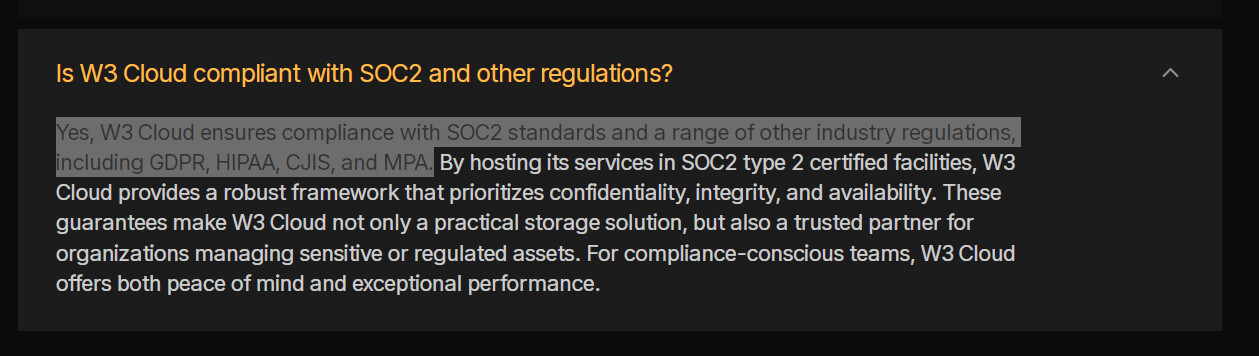
There is also your whitelabelled product running on Object Storage — W3 Cloud | W3 Cloud and maybe more providers that have not yet been identified. (BTW: We are still wondering how Object Storage — W3 Cloud | W3 Cloud can state
Yes, W3 Cloud ensures compliance with SOC2 standards and a range of other industry regulations, including GDPR, HIPAA, CJIS, and MPA.
when they are clearly running their service on the global tier network?
A compliance certification might help them and all other whitelabel customers and Storj even might be able to request high prices for that product if it can be offered as certified out of the box.
Also: If SOC2 is passed maybe that’s also a path to pass ISO 27001 as well and might open the door for other compliance certifications like HIPAA and others.
Who’s to stop them from hiring their own operators from SOC2 Type II-certified facilities?
For example, at Storj: Standard (Global) $7/TB, Advanced (Select SOC2 Type II datacenters) $10/TB (if you really need SOC2 Type II, and only in such facilities in the US or only in similar facilities in the EU). They may implement a global datacenter-only network as well.
I don’t know if they could. Maybe.
But that’s not relevant anyways. The relevant question is, have they?
What they show creates a different impression for me:
They are stating here here and here:
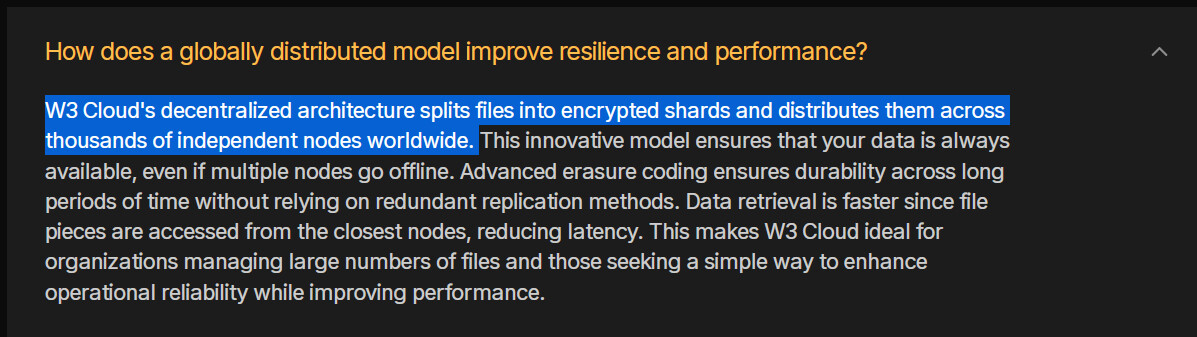
W3 Cloud’s decentralized architecture splits files into encrypted shards and distributes them across thousands of independent nodes worldwide.
With tens of thousands of points of presence around the world
With tens of thousands of storage nodes worldwide,
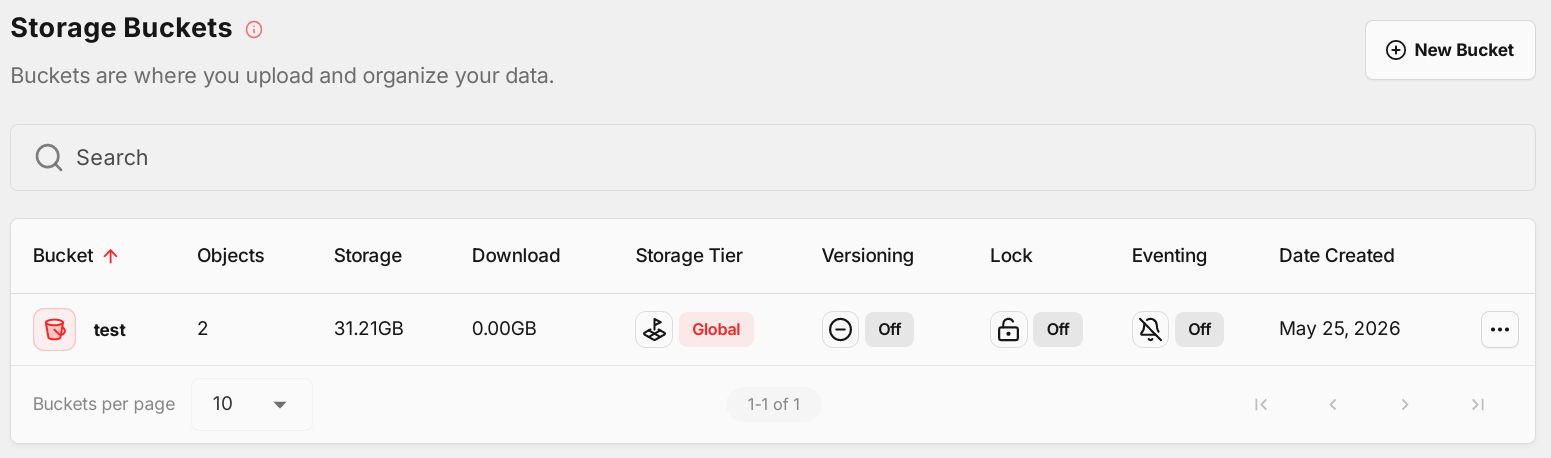
The interface is close to identical to the Storj backend with global tier:

We know it is the Storj white labeled product and when requesting a file for download it even appears to go through gateway.storjshare.io.
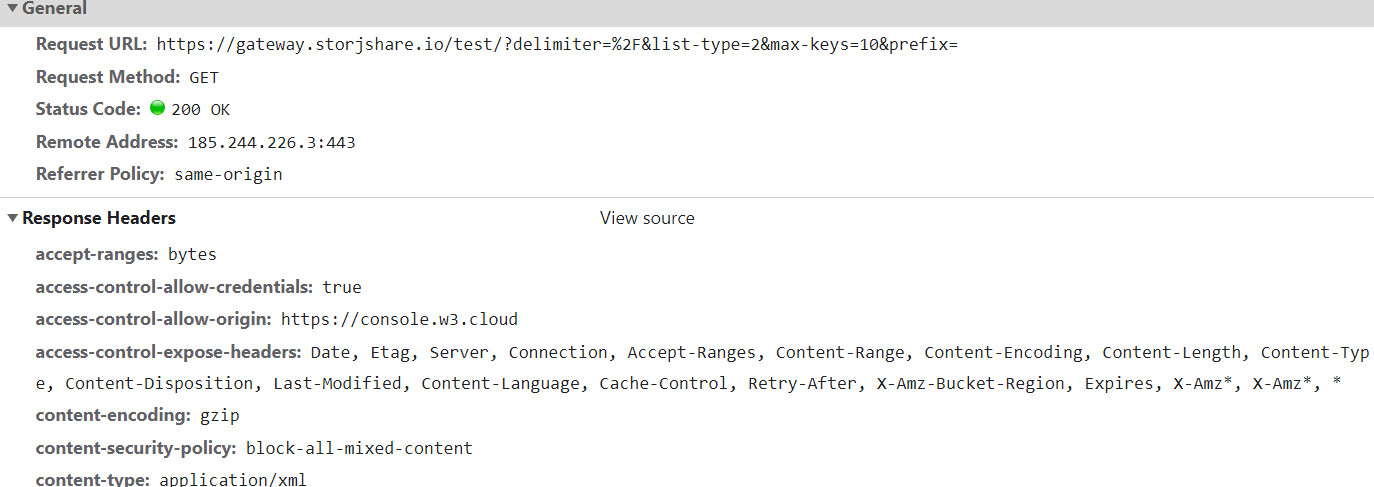
So at least it appears as if they are using the existing Storj infrastructure.
And there is also this:

Same Storj customers except however Vivint is missing, the company we know is on SOC2 Select.
So I would say they are using Storj global. But as said before, I don’t know.
Maybe they just use the Storj gateway together with globally distributed datacenters for their tens of thousands of storage nodes as they claim? Is that possible and how likely is that?
At the end what might be possible to do is to check if up- or downloads from the w3 console will show some correlated activity on some of my nodes.
I don’t have this information, sorry.
Came from B2 a year ago, I prepaid the ix-TrueNAS-deal USD 150 to get USD 250 of storage-balance.
Storing only approx 2.5TB and increasing.
Planning on filling up with Storji-tokens before July to avoid the USD50 minimums.
Still one of the best deals, but now have to bother with crypto.
According to customer service, IF I deposit tokens they will continue to charge my ix-USD-balance with no minimum fee until the ix-12-month deal has passed, then they will charge the Storj-tokens deposited.
Will really consider all-Synology now. Leave one cheaper Synology in a friends house for backup of one expensive Synology in my house.
Hello @speedtriple,
Welcome back!
You may take a look on
Pay in Storj-tokens. Means that if i buy Storj-tokens today for USD 50, and then the value of Storj-tokens drops to half of today, then I only have tokens for USD 25 to pay the monthly fee of USD 7/TB??
So best practice would be to buy Storj-tokens every month to avoid priceloss? That will be a big negative to stay with Storj.
No, if you buy StorJ token for €50 today and put them in your account, your account is not credited with how many tokens you happened to get at that day, but with a credit of €50.
When topping off your account, the price at which you purchase the token for does not matter; only the amount of money you purchase for
I remember looking at your site a few months ago and it was around 725’ish TB? And I looked now… and it’s about the same size? Have you set a cap on your nodes: or is more like a natural plateau?
If it does seem natural, then I wonder if you’re our “reference” EU SNO. Like 716TB over 37 /24s… is just over 19TB-per-subnet. Perhaps that’s a limit all nodes will soft-cap at?