This is the root comment. I’ll update this, as I do more tests, and try to have links to each of the tests I do.
PSU Testing - 9 watts saved; $20 per year
Too long did not read? Watch this post as a video instead - see here: link
Looking to further understand if the efficiency ratings of different PSUs actually correlated with real world savings, I decided to try it out for my self.
For my testings, I swapped the PSU, and only the PSU in my primary storage machine. I tested each PSU for 72 hours straight, and had the machine behave as it would normally when in production. That means:
- No 100% load testing
- No idle testing
- No reboots
- Only real world power draw, as measured from the wall by a Shelly Plug
- Measurement taken every 30 seconds
The system, that I’m testing on, is an aging Synolgy rs3617xs (non plus unit), currently loaded with the following configuration
- Xeon E3-1220L v2 - 2c/4t 17watt TDP (downgraded from E3-1230v2)
- 4x8GB DDR3 1666 mhz ECC Udimm
- 4x Arctic S8038-7K with aggresively turned down fan curve
- 2x 2TB Sata SSDs
- 8x 20TB Toshiba HDDs
- CPUs switching between
- Stock synology 500 watt bronze rated
- Corsair sf600 gold rated
- Seasonic Prime Fanless PX450 platinum rated
The storage machine currently acts purely as a SAN array, backing a handful of very active VMware VMs.
Findings
All tests were run for three days straight. I wanted to make sure that fluctuating CPU times did not mess with the results, so here is first a graph of the three runs CPU activity time

Plotting the data from all the datapoints in just a single run, results in a line that’s not usable to me. A measurement every 30 second for three days is 8640 points of data, which results in a thick line, that’s all over the place, as seen here.

I’ve decided to aggregate data for each hour of the three runs, and plot the averages for each run. Doing this loses resultion in the measurements, but brings clarity to the graphs, which is a good tradeoff in my book.
Addtionally, and perhaps more importantly, I also get rid of any measurements that failed due to a sometimes flay Shelly Plug, which resulted in a line, where the measurement read “0” for all noted datapoints.
Therefore, plotting the aggregated result of the three runs, results in a graph that looks like this:
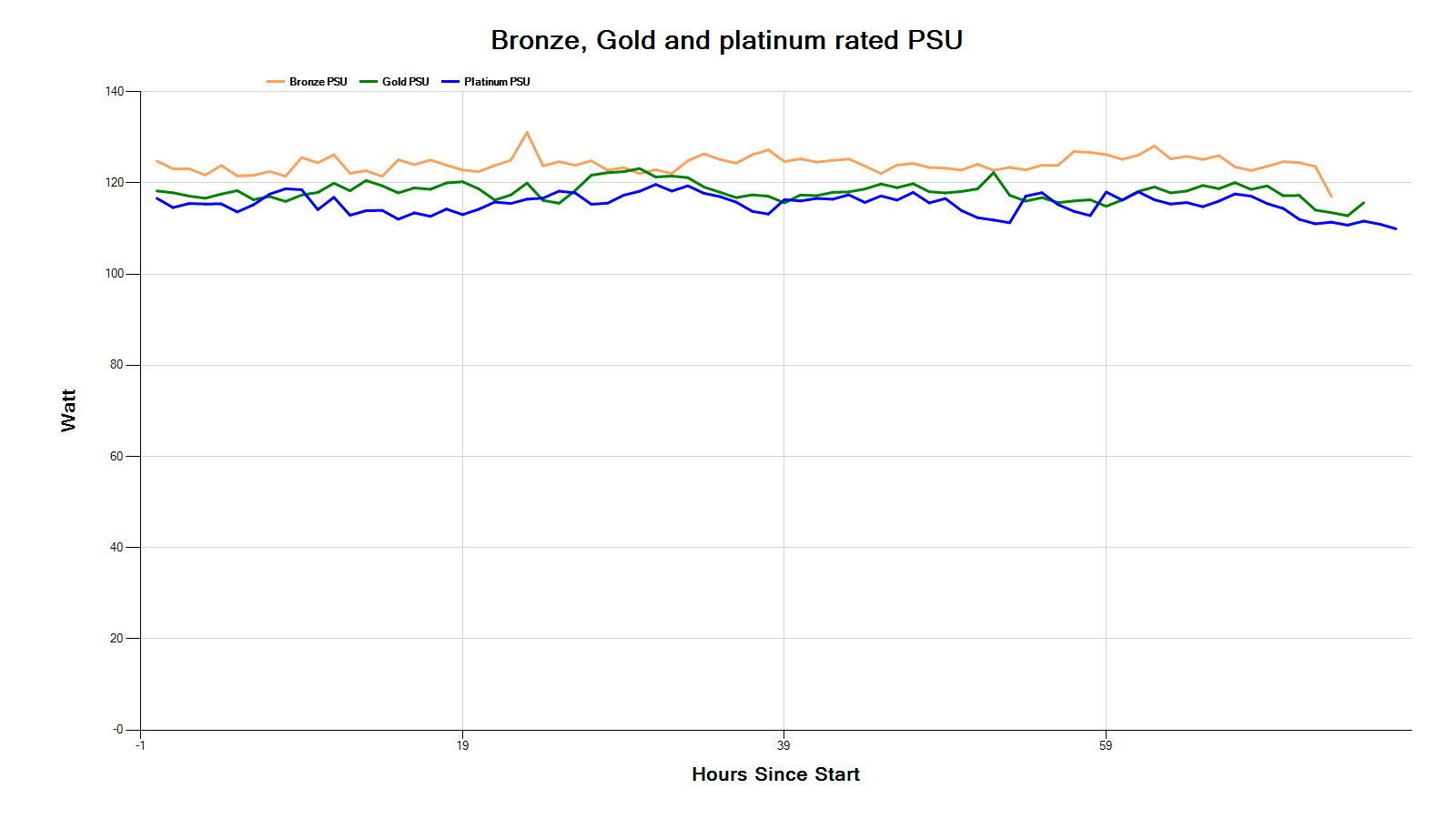
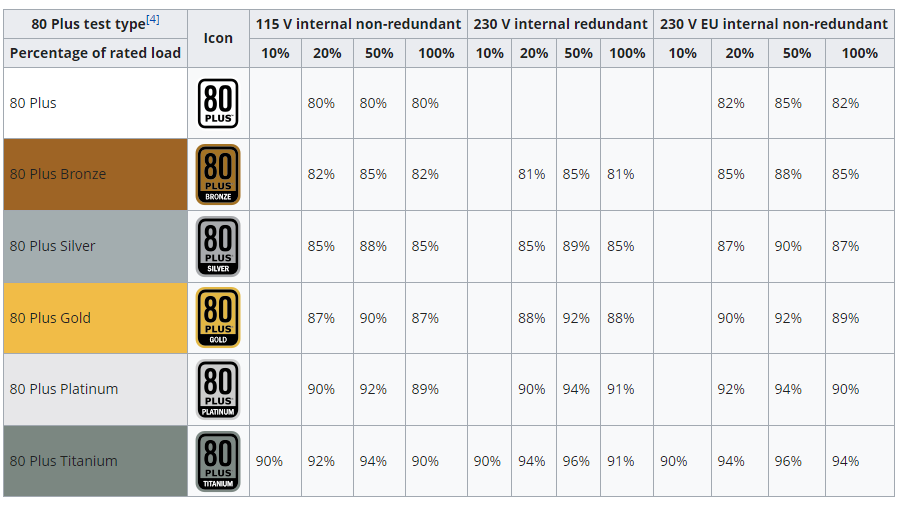
Comparing my findings to the efficency ratings of PSUs, as expected the bronze PSU uses the most amount of power, with a larger jump to gold PSU, and then again a smaller jump to Platinum PSU.
Taking just the average of the aggregated hourly values from each PSU; I get the following stats:
- Bronze: 124 watts
- Gold: 118 watts
- Platinum: 115 watts
If we multiple each value with their respective expected power supply inefficiencies (.85, .90 and .92), we get an estimated component power draw during the three runs as:
- Bronze: 105.5
- Gold: 106.3
- Platinum: 106.1
These numbers are within margin of error with each other, so I’ll accept attribution for all changes in powerdraw, to the construction of the power supplies themselves.
Savings
Going from bronze to platinum results a net saving of around 9 watts. That brings the yearly saved kilowatt hours to 76, which with current average power prices in Copenhagen, Denmark that to $20 saved per year. I think that is splendid.
I would not call it a way to get rich, but it’s an easy upgrade to make.
Thank you for reading
2 Likes
First of all, it’s a sport – does not need to be profitable!
Next: And important bit here is how are the 80 Plus: certification defined: they mandate specific efficiency at the specific load levels. All before titanium – at 20%, 50%, and 100%.Titanum adds 10% level. To get certified a PSU shall demonstrate performance at those loads (and some power-factor restrictions too, that are irrelevant for residential customers). But if your server consumes, I don’t know, 35% of rated power – then who knows, nobody guarantees anything. There totally could be points where platinum behaves worse than Gold. I’m not sayin there are, I’m saying there could be, and because specific performance is not mandated – it cannot be assumed to be same or better.
For example, PSU may work in two different modes, that provide awesome perf at 20% with sharp fall off, and 75%, with slow fall off, thereby satisfying requirement at 20, 50, and 100, but being absolutely horrific at 10% or 30% (I wonder if that was actually a driving factor for Titanium spec :)). And so if you have 600W power supply and your server consumes 180W – well, that sucks.
So I would check how far are your power consumption from those checkpoints, and maybe swap PSU with the one to hit it closer. The difference can be drastic.
3 Likes
I think I just found another 15 W savings for you:
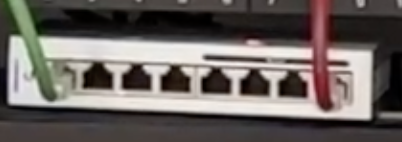
I had it, assuming it’s US-8-60W, it was my cat’s favorite nesting spot. It was HOT all the time. Modern one from Flex series is much better.
3 Likes
Hey cheers for that friend! I don’t have the nice high end equipment to measure the units in a broad band of output power. I guess I could plug them up to my computer with a graphics card, and overclock the snot out of that to hit different power targets, and then measure the power drawn from the wall while keeping the reported power component draw in check.
I think it’s a bit outside of the sphere of measurements I’m comfortable taking - and also making a blog post stating my conclusions to be true 
The Platinum rated Seasonic unit that I ended up with was the lowest power output, highest certificated unit I could find on the market.
Interestingly, Seasonic also produces the Prime TX600 - a titanium rated unit, in the same chassis as mine. I’d love to measure if efficency losses dropping down to ~18% load ( from ~23%) outweighs efficiency gains by going from a platinum to a titanium unit, but for the price of a new fanless tx600 unit, I think there’s other areas I’d like to measure first (wink wink, something is in the mail yessør)
Oh yeah, the old US-8-60. Was I a stupid guy who threw out the suppiled PoE injector for my single AP?
Yes, I was.
Am I now in need of that stupid old US-8-60, because I want to power just that single AP?
Also yes.
SAN is wired directly to VMhosts and the rest of my gear fits into the UDM pro (with one of the ports feeding to a generic 5 port switch in the media cabinet next to television).
Well, do you not know yet how it goes :)? You research the equipment, specs, buy a bunch of electronic loads on eBay, progressively more expensive ones; research power quality and efficiency intricacies, figure out I2C protocols PSU talk to BMC, decode that bus, get horrified, then try power supplies from different vendors and batches, then after three months, having spent $3000 and having become an expert of power supply internals and firmware, and having befriended a bunch of Seasonic and Supermicro factory engineers, for having helped them narrow down a few corner cases (because of course you will stumble on them) and other normal few bugs, you will have saved 500mW on your setup, and, satisfied, moved to a next project…
They are very cheap on ebay. Probably worth a month or two worth of electricity running that switch.
Actually, this is another place to save power – replace AP with a more power efficient one: I settled on U6 Pro, because U7 Pro consumes twice as much power, and if you really need 6GHz bandwidth – just connect ethernet cable by now… Ubiquiti gear flies off of your hands on ebay. Very easy to offload.
1 Like
Whew lad, I wonder where you got that eerily specific piece of knowledge 500 mW on hardware is a win. The problem is, that I’d then be looking a a closed filled with $3000 worth of power supplies, looking for a project to power, quickly evolving into a $3000 monthly power bill instead.
They are very cheap on ebay
I see. Picked one up, looking forward to seeing how much it can shave off. I’ve been eyeballing getting rid of that stupid switch for ages, thank you for making me make the switch. SATA cables were on a firesale as well, picked up a few of those, which I need for another project I’m working on.
I’ve thought about getting a better AP for some time, but honestly my UAP-AC-lite does everything it needs. Every device, which speed I care about, is wired - every thing else does fine on dog slow wifi. The AP is stated at ~7 watts, which is super fine with me. I looked up the specs of the ones you listed - I’d get the U6 pro as well if I was purchasing today, but wow, 20+ watts on the U7 pro is mental.
1 Like
nonono, you use ebay as your closet. Done with a piece of hardware – off onto ebay it goes.
AC-Lite is absolutely awesome, I agree. Very reliable, Qualcomm chipset, none of that mediatek nonsense.
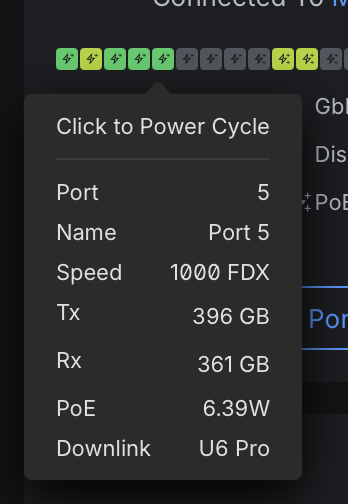
Does not your switch show power usage on the port?
This is U6 Pro. U7 was about 13 IIRC.
Awesome idea for a video! i enjoyed it
1 Like
If you want to throw money at it get a titanium power supply which has a standard for efficiency at 10% load.
… but are very expensive.
1 Like
Are they? Supermicro Titanium for sale | eBay
First unit: nominal wattage is 2000W. Which means, @Ottetal 's usage is at 6% of the expected load. Which means the Platinum mark does not mean anything, because the first efficiency requirement is at 10%.
Besides, capacitors in unused PSUs age quickly: electrolytes evaporate or dry out, oxide layers weaken.
Some example citation: https://www.we-online.com/components/media/o467325v410%20SN019_EN_d.pdf
There’s a reason these are so cheap, and the reason is, you can’t really rely on them anymore, they’re maybe good for parts at most.
1 Like
I strongly disagree.
Counter argument, if you need one: there are motherboards of the same age out there and requirements for the power quality VRMs produce for the CPU are much higher — and yet, they work for ages just fine.
Do capacitors age out, esr drift, capacitance change? Yes. Does it matter? No.
You can remove 80% of those capacitors from the PSU and it will continue working as if nothing happened. Most of that capacitance is for EMC compatibility, power factor corrections, and other irrelevant for most people needs. Those that are revenant — are driven by regulation with negative feedback. Even if envelope exceeded — 5 and 12V rails are not picky to power quality. The picky ones are served by just as aged out VRM on the motherboard.
So no, that objection is not valid.
And on the 2kw PSU which is happened to be first result — don’t buy it obviously if your power consumption is not 200W. I bought 960W one. Works as advertised. I also bought old motherboard with capacitors, old backplane with capacitors, or CPU with capacitors, and wait until you learn under what environmental conditions do capacitors in the ECU in my car work for past two decades.
The reason for the pricing has absolutely nothing to do with their viability.
1 Like
MoBos don’t have the kind of high-voltage capacitors that PSUs have. Different tech inside, e.g., solid state vs. liquid. Solids can’t dry out the same way.
No idea about your other claim, still, would be rather cautious about removing something from a PSU that could start a fire.
1 Like
I don’t think I follow. Are you talking about high side ripple? It’s completely and urrely irrelevant for this use case. It gets rectified and switch-mode converted to 12 and 5.
And then, MLBs absolutely do have liquid electrolytic capacitors. Plenty of them. Especially old-er ones. Your point about “high-voltage capacitors” does not hold. Each capacitor is specified for the intended operating range.
Electrolytic lifetime is driven by temperature and ripple current. Not by the fact that the capacitor happens to sit inside a PSU instead of on a motherboard.
If capacitor age alone made hardware unreliable, the industry would not have decades-old routers, motherboards, amplifiers and industrial controllers still running continuously.
I did not suggest removing components from a PSU. The statement was to illustrate amount of margin there is built in. Power supplies are not balanced on a knife edge.
The claim “old psu → bad” is unsubstantiatible.
If we dig further – electrolytic capacitors provide low frequency tank capacitance. The deal there is the more the better, but this is not what drives stability; decimating their capacitance or quadrupling ESR does not change anythign in any meaningful way. Slow ripple can be easily tracked and compensated for by the downstream control loop. Yes, VRM will work harder – but that’s what it’s there for. High frequency trainsients and harmonics suppression is what matters. And they are killed by ceramic and polymer capacitors, that have much larger lifetime, and don’t “dry out”.
Dried out electrolytic capacitors reduce some margin, but don’t make PSU or other piece of equipment unusable.
1 Like
Speaking of Platinum vs Titanium.
My server now consumes around 150W, away from original 200, so this prompted me to review what PSU I have on hand.
I had
- PWS-920P-SQ: Platinum: 920 Watts (a pair came with the chassis)
- PWS-1K23A-1R: Titanium: 1200 Watts (Bought on ebay locally two years back for $20)
At 150W Platinum is loaded at 16% (Somewhat close to 20%).
And titanium == 12%. Close enough to 10%, where titanium has a checkpoint.
(I’m actually not sure is the spec referring to load power or input power. Because if the former – we are sitting almost exactly at 10%).
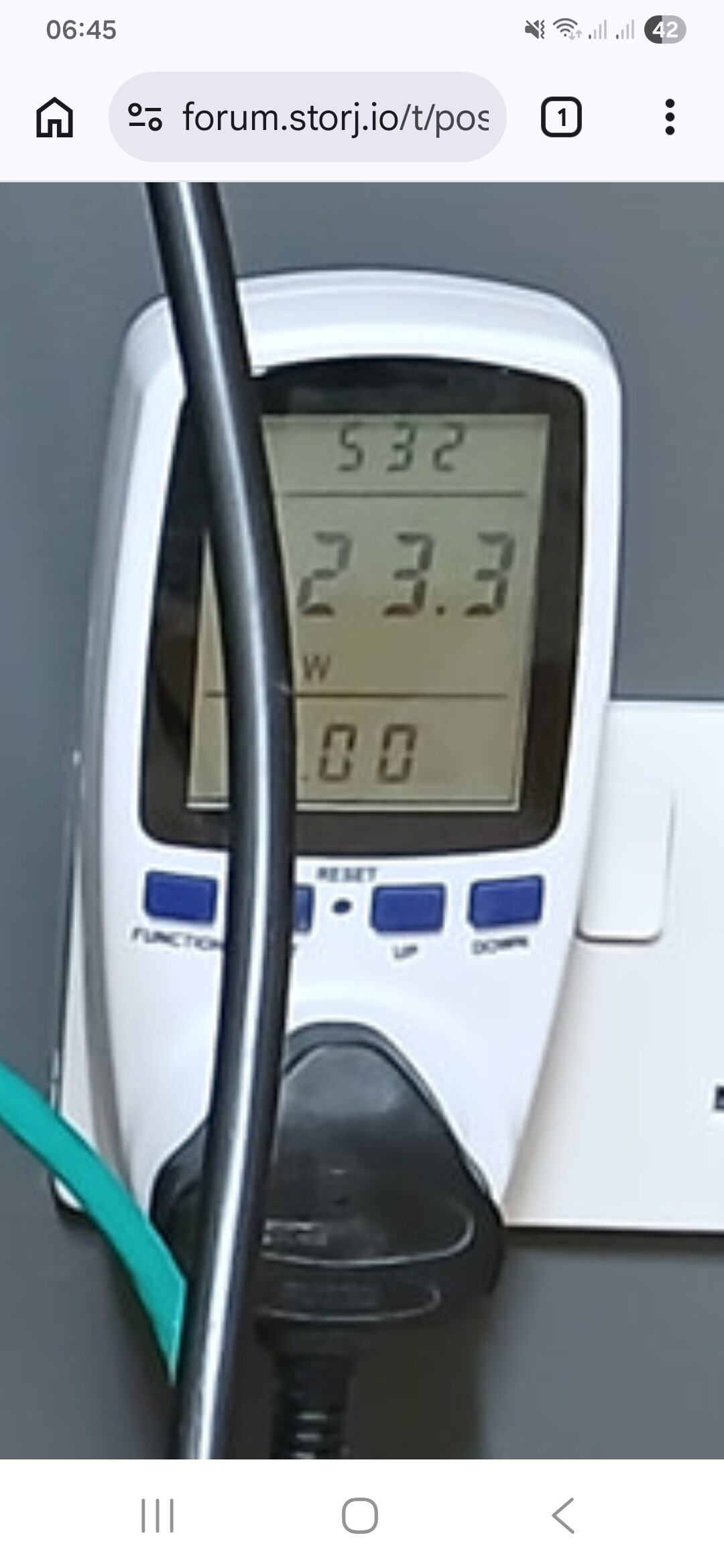
I did not have much time, so I hot swapped them without disturbing the server, and measured power usage with KillAWatt.
Observed power ranges:
- Platinum: 146-150W
- Titanium: 141-146W.
And voila, saved another 4.5 Watts. 
Curious observation. The IPMI got very confused, because these two have different firmware, so I had to power off the system to kick some sense into IPMI. When the system powered off, and I shut down the USP – fan in PSU spinned up. It was spinning for about 20 seconds. I guess discharging tank capacitors. The Platinum did not exhibit that kind of behaviour. Just a curious observation.
4 Likes
I guess it depends on what’s hiding behind the cable?
4 Likes
Did you compared the money saved with the money spent buying them?
Nothing wrong to use the best one if is just sitting around, already baught in the past, but to buy a new PSU spending 200$ just to save 20$/year wouldn’t be a great deal.
I know that fanless Seasonic is crazy expensive, and just because is fanless. The similar rated one, with fan, is cheaper.
1 Like
I’d love to get my hands on one. Maybe Seasonic will send over one for testing, since I am now a Micro Influencer T E C H T U B E R
An official rating at 10% is nice, since the smallest titanium model they make is 600 watts, bringing my utilization down from ~23% to around ~17%.
I’d be interesting to see if additional two percentage points of efficiency still is less power when moving lower down the efficiency curve.